Signature Therapy
Face Treatments
Science-backed aesthetic treatments targeting pigmentation, ageing, acne, and skin texture.
Need guidance?
Our clinical team will recommend the best protocol based on your unique concerns.
Book a Free ConsultationNon-Surgical Face Lifting, Performed at Home
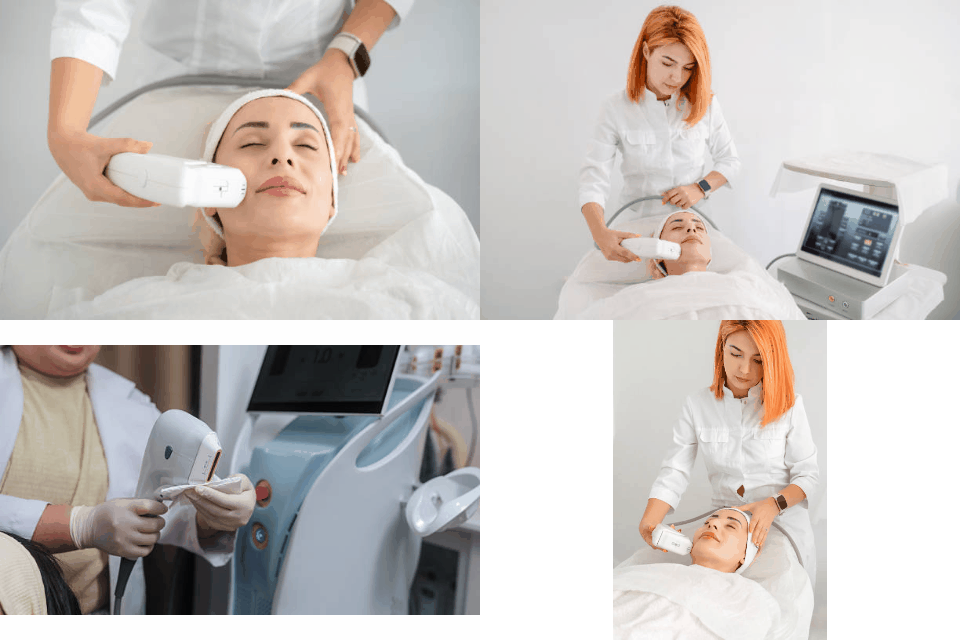
What HIFU does: HIFU stands for High-Intensity Focused Ultrasound. It delivers focused ultrasound energy below the skin surface to the layer that surgeons tighten during a facelift, without breaking the skin. The energy creates controlled thermal points that prompt the body's own collagen response over the following weeks. There are no incisions, no needles and no general downtime.
What HIFU realistically achieves
Being straight about this matters, because the gap between expectation and outcome is where dissatisfaction comes from.
HIFU is good for: mild to moderate laxity along the jawline, under the chin, on the neck and around the brow. Gradual tightening. Definition that has softened rather than collapsed.
HIFU is not a substitute for surgery. If there is significant excess skin, a surgical lift will do something HIFU cannot. An honest consultation will tell you which category you are in before you spend anything.
Timeline
- During treatment: 45 to 90 minutes depending on area. Most people feel brief warmth or prickling at each energy point
- Immediately after: Possible mild redness. You can return to normal activity the same day
- Weeks 2 to 4: Early tightening becomes noticeable
- Weeks 8 to 12: Peak collagen response. This is when results are assessed
- Ongoing: Results typically maintained for months, with maintenance depending on age and skin condition
The delayed timeline is the most misunderstood part of HIFU. It is not an instant result, and anyone promising one is overselling.
How many sessions
Many people see meaningful change from a single session, with the full effect appearing at around three months. Others benefit from a second session. Your assessment will tell you which, and we will say so before you book a package rather than after.
What affects the cost
HIFU pricing in Delhi varies widely, and the variables are worth understanding before comparing quotes:
- Number of shots or lines delivered. This is the real unit of treatment. A quote without a shot count is not comparable to one with it.
- Area treated. Full face, face and neck, or a single zone such as the jawline.
- Device used. Different platforms have different depth cartridges and energy delivery.
- Operator experience. Placement and depth selection determine the result more than the device brand does.
Ask any provider for the shot count and the treatment areas in writing. That single question makes quotes comparable. Request a consultation and we will give you both.
Combining treatments
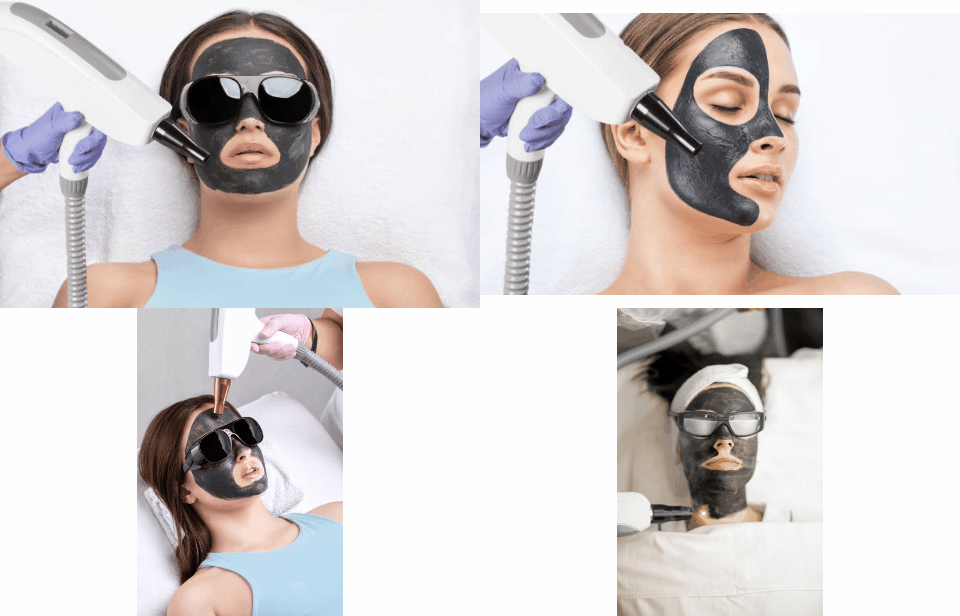
HIFU works on structure and laxity. It does not address surface texture, tone or pigmentation. Those respond to carbon laser and Nd:YAG toning, which are often sequenced alongside HIFU in an anti-ageing protocol. We will explain the order and the intervals at consultation.
FAQs
Is HIFU painful?
Most people describe brief heat or a prickling sensation at each energy point rather than pain, with deeper cartridges felt more than superficial ones. It is generally well tolerated without anaesthetic, and the sensation stops the moment the treatment does.
How soon will I see HIFU results?
Early tightening is often visible from two to four weeks. The full effect appears at around eight to twelve weeks, once the collagen response has completed. Anyone promising a same-day facelift result from HIFU is misrepresenting the treatment.
How long do HIFU results last?
Results are typically maintained for several months to a year, depending on your age, skin condition and lifestyle. HIFU slows and partially reverses laxity, it does not stop ageing, so maintenance sessions are usually planned annually.
Is there downtime after HIFU?
Generally none. Mild redness or slight tenderness may occur and usually settles within hours. Most people return to normal activity the same day, which is one reason it suits an at-home appointment.
Who should not have HIFU?
HIFU is not suitable for everyone. Active skin infection in the treatment area, certain implants or metal in the treatment zone, pregnancy and some medical conditions are contraindications. Disclose your full medical history at consultation so this can be assessed properly.
Can HIFU be done at home?
Yes. HIFU is a non-invasive, device-based treatment requiring no incisions or needles, so it can be delivered at your residence with the same equipment and protocol used in a clinic setting.